


Appliqué vs. Reverse Appliqué: What's the Difference?

If you're a sewer you might think it’s pretty obvious. Even if you’re not a sewer it might be obvious. The simple answer: appliqué is when you sew a cut out design on top of the garment and reverse is when you sew the design underneath the garment and cut out the garment to reveal the design.
Picture of each here
While both techniques involve layering fabric to create beautiful designs, they each have their own unique look and personality.
As someone who loves giving thrifted clothing a second life, I enjoy using both methods to create one-of-a-kind pieces that are full of character. Here's a closer look at each technique and why I love them.
What Is Appliqué?
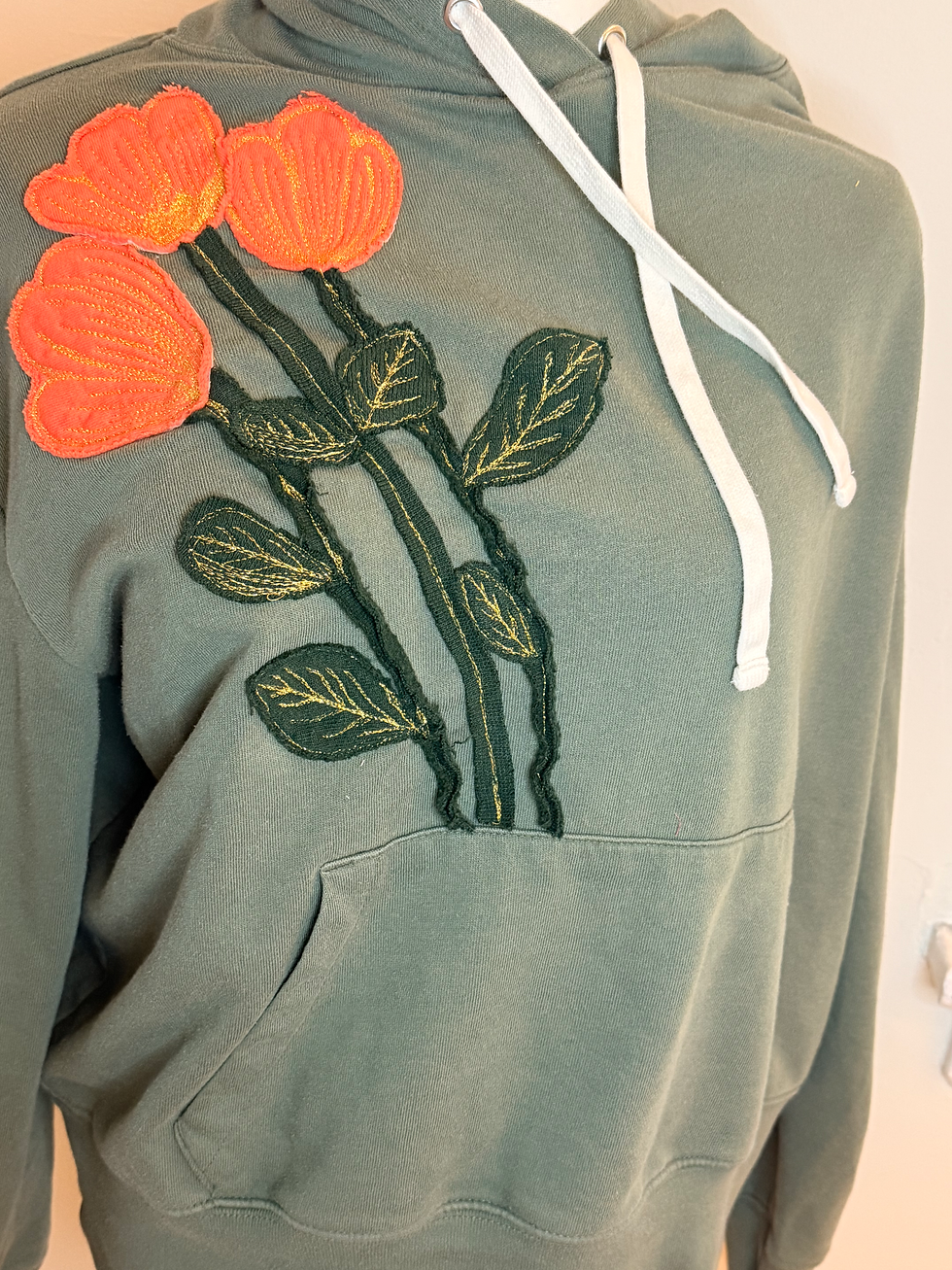
Appliqué is the process of sewing a piece of fabric on top of another fabric to create a design.
Think of it like creating a collage with fabric. You cut out the shape you want (whether it's a flower, smiley face, letter, lightning bolt, or something completely custom) and stitch it onto the garment. The edges can be left raw for a relaxed, vintage feel or finished with embroidery for a polished look.
What Is Reverse Appliqué?
Reverse appliqué flips the process.
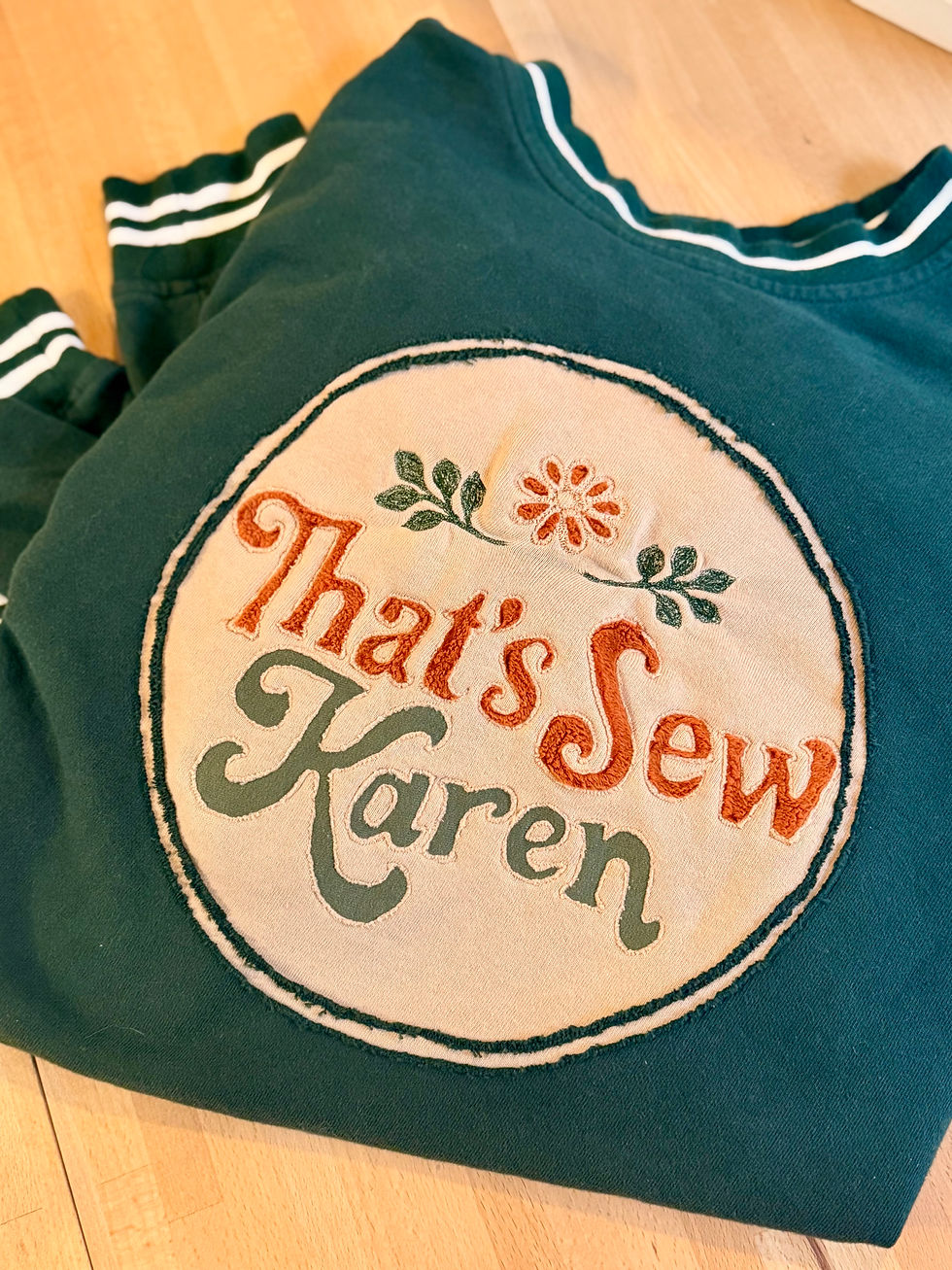
Instead of placing fabric on top, I sew a layer of fabric behind the garment. Then I carefully cut away part of the top layer to reveal the fabric underneath.
The result is a design that looks like it's built right into the garment rather than sitting on top of it.
This technique creates beautiful texture, dimension, and that perfectly worn-in, lived-in look that I absolutely love.
Which One Is Better?
Honestly? Neither! They’re just a little different!
If you love bold, colorful statement pieces, appliqué may be your favorite.
If you prefer something with a softer, more distressed, vintage-inspired look, you'll probably fall in love with reverse appliqué.
Sometimes I even combine both techniques in the same design for extra texture and personality.
Handmade Means Every Piece Is Different
One of my favorite parts of creating is knowing that no two garments will ever be identical.
I source thrifted clothing, rescued fabrics, quilt scraps, and vintage textiles whenever possible. Every garment has its own story before it even reaches my sewing machine. Through my creative process I help add to the story and help give the item a new life!
That means you're not just buying clothing. You’re giving the clothing a second chance while also wearing a piece of handcrafted art that no one else has!
Sustainable Fashion with Personality
Fast fashion creates millions of tons of textile waste every year. Choosing upcycled clothing is one small way we can help keep beautiful materials in use while creating something that's meaningful, unique, and made to last.
Every stitch is sewn with intention, and every design is created to celebrate individuality over mass production.
Whether you're drawn to bold appliqué, textured reverse appliqué, or a little bit of both, I hope you find something that feels uniquely you.
Thanks for supporting handmade, sustainable fashion and for helping give beautiful fabrics a second chance.
Happy stitching,
🧡Karen
Comments